Python With Close File
Closing Python Files with close() Use the close() method with file handle to close the file. When you use this method, you clear all buffer and close the file. My_file.close() You can use a for loop to read the file line by line. Judging from comp.lang.python and other forums, Python 2.5’s new with statement. “set things up” could be opening a file, or acquiring some sort of external resource, and “tear things down” would then be closing the file, or releasing or removing the resource. Process its contents, and make sure to close it, you can simply do. Identifiers have been opened by Python, and to close them all? Why I ask: I learned Python after cutting my programming teeth on Matlab, where you get a list of all open file identifiers (that is. Multiple calls to logging.getLogger('someLogger') return a reference to the same logger object. This is true not only within the same module, but also across modules as long as it is in the same Python interpreter process.
HiAs part of daily monitoring i need to check connection of multiple RFC in multiple STG and PRD systems. Its hectic work. Connection Test of RFC using program/script. All sort of ideas are welcome. Tags: technical_operations. Step by Step for establishing RFC Connection between SAP-BW & Data Service. In the next two steps I will talk about the RFC Connection in SAP BW. Now logon into the SAP BW. Expand TCP/IP Connection, then Select Create. The Program ID is the one which you have already created in DS Management Console. Note: If an RFC user has SAP_ALL, then it can be used to administrate any connection data - including it's own - and remove this client side RFC protection again. So this is not an excuse to give the RFC user SAP_ALL! Client 300 - Workflow and application authorizations. RFC is a SAP protocol to handle communications between systems to simplify the related programming. It is the process of calling a function module which is residing on a. Setting up a trusted RFC connection. As a SAP Administrator I often get questions on trusted RFC connections. I also noticed on the SCN forums that there are often questions regarding the setup. Any ideas how to set up Trusted RFC connection containing SAP Router? Like (0) Tom Cenens Post author. December 7, 2010 at 8:00 pm. 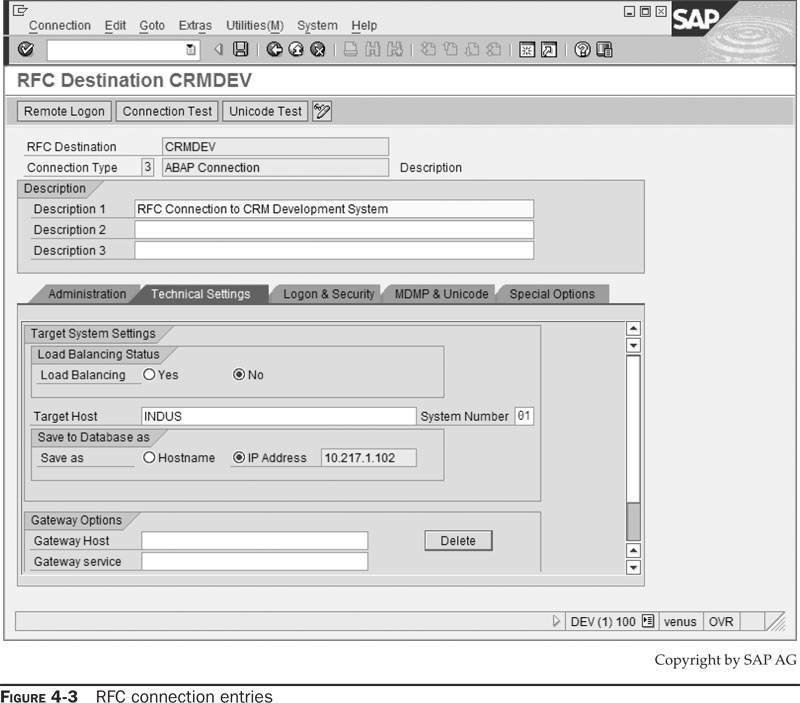
- Python With Close File
- Python Close File If Open
- Excel Vba Close File Without Saving
- Read Multiple Files In Python
Regarding my previous question, I noticed that in both answers that used the open() function, there was no mention of closing the file.
Closing a file will free up the resources that were tied with the file and is done using Python close() method. Python has a garbage collector to clean up unreferenced objects but, we must not rely on it. In Python 2.5, the file object has been equipped with __enter__ and __exit__ methods; the former simply returns the file object itself, and the latter closes the file.
Python With Close File
I've read that it's good practice to do so, but is there actually any need for it? Is it just unnecessary code?
Does the file get closed automatically?
closed as off-topic by terdon♦, kos, Jacob Vlijm, karel, Eric CarvalhoNov 24 '15 at 10:54
- This question does not appear to be about Ubuntu within the scope defined in the help center.
1 Answer
When do files get closed?
As we can learn from Is explicitly closing files important? (StackOverflow), the Python interpreter closes the file in the following cases:
- you manually invoke the
close()method of afileobject explicitly or implicitly by leaving awith open(..):block. This works of course always and on any Python implementation. - the
fileobject's last reference got removed and therefore the object gets processed by the Garbage Collector. This is not a language feature, but a special feature of the CPython implementation only, so for portability don't rely on this! - the Python interpreter terminates. In this case it should close all file handles that got opened. Some older versions of Python3 would have also printed a warning that you should have closed them manually yourself. However, imagine a crash or you force-killing the Python interpreter and you will see that this is also not reliable.
So only the first (manual) method is reliable!
What would happen if a file stays open?
First, depending on the implementation of your Python interpreter, if you opened a file with write access, you can not be sure that your modifications got flushed to the disk until you either manually induce it or the file handler gets closed.
Second, you may only open a limited number of files on your system per user. If you exceed this limit by e.g. opening many files in a loop in your Python program without closing them as soon as possible, the system may refuse to open further file handles for you and you'll receive an exception. It may also happen that your program takes the last allowed open file and another program will fail because it gets declined.
Third, open files on a removable device prevent it from getting unmounted or ejected. You may still delete the file on some file systems like ext4, where simply the file descriptor/hard link to the file's inode gets removed/unlinked but the program which opened the file may still access the inode through its own temporary file handler. This is e.g. also the mechanism that allows you to update packages while the respective software is running. However, e.g. NTFS has no such feature. It may however never get modified by two concurrent processes, so it will be still somehow blocked for others.
Not the answer you're looking for? Browse other questions tagged pythonfilesio or ask your own question.
File I/O[edit]
Here is a simple example of file I/O (input/output):
The output and the contents of the file test.txt are:
This child has the power to change the world—for good or for evil. Blood of elves audiobook youtube. The only good elf, it seems, is a dead elf. As the threat of war hangs over the land and the child is hunted for her extraordinary powers, it will become Geralt's responsibility to protect them all—and the Witcher never accepts defeat. Geralt of Rivia, the cunning assassin known as the Witcher, has been waiting for the birth of a prophesied child. But times have changed, the uneasy peace is over, and now the races are fighting once again.
Notice that it wrote a file called test.txt in the directory that you ran the program from. The n in the string tells Python to put a newline where it is.
An overview of file I/O is:
- Get a file object with the
openfunction - Read or write to the file object (depending on how it was opened)
- If you did not use
withto open the file, you'd have to close it manually
The first step is to get a file object. The way to do this is to use the open function. The format is file_object = open(filename, mode) where file_object is the variable to put the file object, filename is a string with the filename, and mode is 'rt' to read a file as text or 'wt' to write a file as text (and a few others we will skip here). Next the file objects functions can be called. The two most common functions are read and write. The write function adds a string to the end of the file. The read function reads the next thing in the file and returns it as a string. If no argument is given it will return the whole file (as done in the example).
Now here is a new version of the phone numbers program that we made earlier:
Notice that it now includes saving and loading files. Here is some output of my running it twice:
The new portions of this program are:
First we will look at the save portion of the program. First it creates a file object with the command open(filename, 'wt'). Next it goes through and creates a line for each of the phone numbers with the command out_file.write(k + ',' + v + 'n'). This writes out a line that contains the name, a comma, the number and follows it by a newline.
The loading portion is a little more complicated. It starts by getting a file object. Then it uses a while True: loop to keep looping until a break statement is encountered. Next it gets a line with the line in_line = in_file.readline(). The readline function will return an empty string when the end of the file is reached. The if statement checks for this and breaks out of the while loop when that happens. Of course if the readline function did not return the newline at the end of the line there would be no way to tell if an empty string was an empty line or the end of the file so the newline is left in what readline returns. Hence we have to get rid of the newline. The line in_line = in_line[:-1] does this for us by dropping the last character. Next the line name, number = in_line.split(',') splits the line at the comma into a name and a number. This is then added to the numbers dictionary.
Advanced use of .txt files[edit]
You might be saying to yourself, 'Well I know how to read and write to a textfile, but what if I want to print the file without opening out another program?'
There are a few different ways to accomplish this. The easiest way does open another program, but everything is taken care of in the Python code, and doesn't require the user to specify a file to be printed. This method involves invoking the subprocess of another program.
Remember the file we wrote output to in the above program? Let's use that file. Keep in mind, in order to prevent some errors, this program uses concepts from the Next chapter. Please feel free to revisit this example after the next chapter.
Python Close File If Open
The subprocess.call takes three arguments. The first argument in the context of this example, should be the name of the program which you would like to invoke the printing subprocess from. The second argument should be the specific subprocess within that program. For simplicity, just understand that in this program, '/p' is the subprocess used to access your printer through the specified application. The last argument should be the name of the file you want to send to the printing subprocess. In this case, it is the same file used earlier in this chapter.
Exercises[edit]
Now modify the grades program from section Dictionaries so that is uses file I/O to keep a record of the students.
Now modify the grades program from section Dictionaries so that is uses file I/O to keep a record of the students.
Excel Vba Close File Without Saving
| Non-Programmer's Tutorial for Python 3 | ||
| ← Revenge of the Strings | File IO | Dealing with the imperfect → |